Choose two clear colour areas
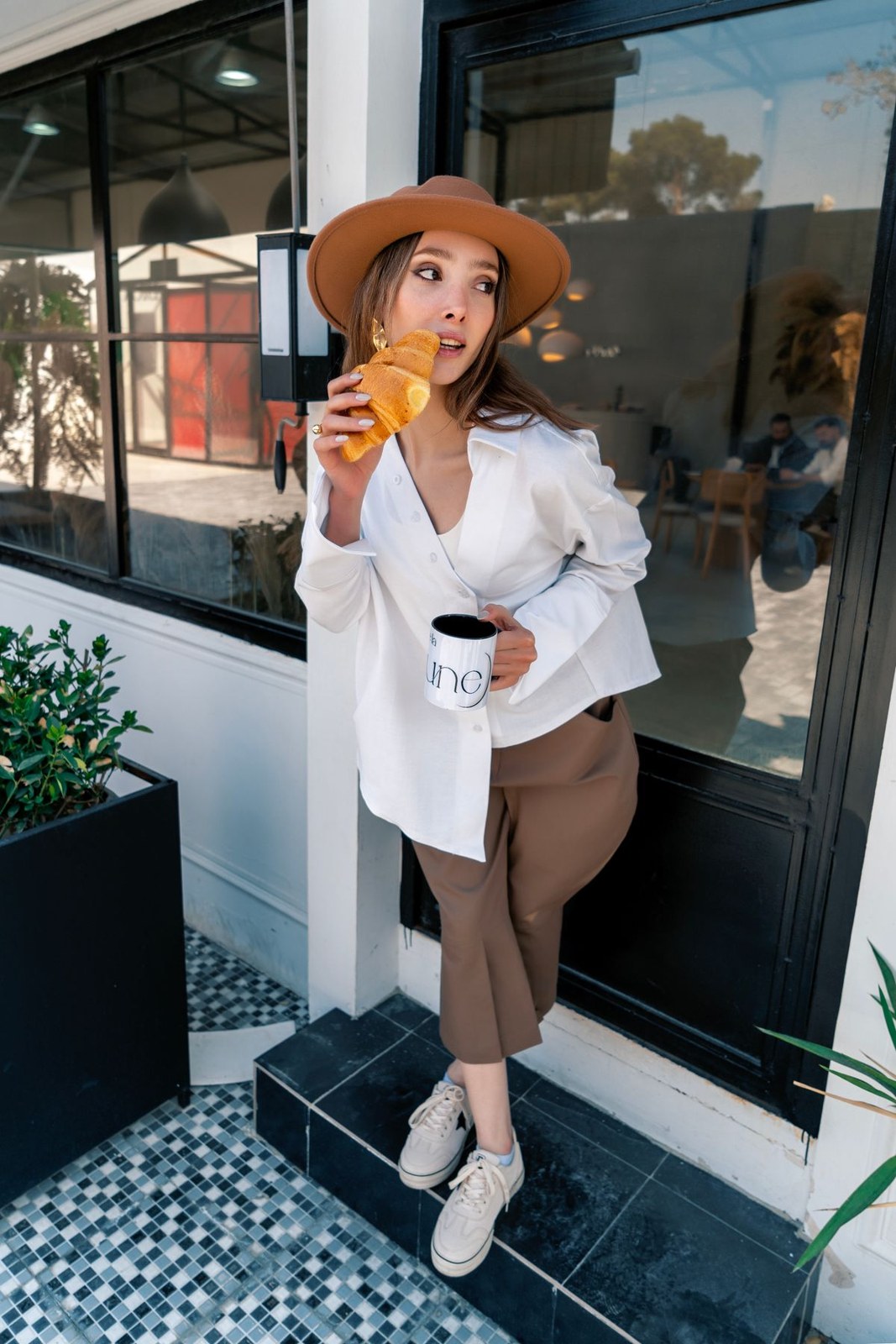
A white blouse and brown trousers create an understandable base without many small accents. A belt in a related brown can define the waistband, although it need not match the trousers exactly. If you tuck in the blouse, ease a little fabric back out so it does not pull when seated. Leaving the hem loose is also possible if it does not bunch awkwardly over the belt. Check the button front while reaching forward, especially when planning to wear the combination all day. The movement should remain easy rather than depending on a perfect standing position.
Check the cropped length with boots
With shorter trousers, the gap above the shoe becomes part of the combination. White or cream boots can repeat the blouse colour. See whether the hem stays above the boot shaft or moves over it; an edge that catches on the shaft at every step soon becomes irritating. Test this while sitting too. If you prefer flats, repeat the length check with that pair. The aim is not to create a prescribed foot shape, but to choose an intentional connection between the trousers and shoes that works when you move.
Fit the accessories to the plan
A pale brown hat can relate to the trousers, but the outfit does not require one. Consider where you would put it indoors and whether it stays secure on your route. For shopping or public transport, a bag with a reliable fastening may be more useful than another decorative detail. In wind, a suitable outer jacket provides more control than simply rolling up blouse sleeves. Finally, move with the bag and jacket as well as the blouse and trousers. This reveals whether the belt, shoulder strap or sleeves interfere with each other in the complete outfit.