Find the right amount of fabric first
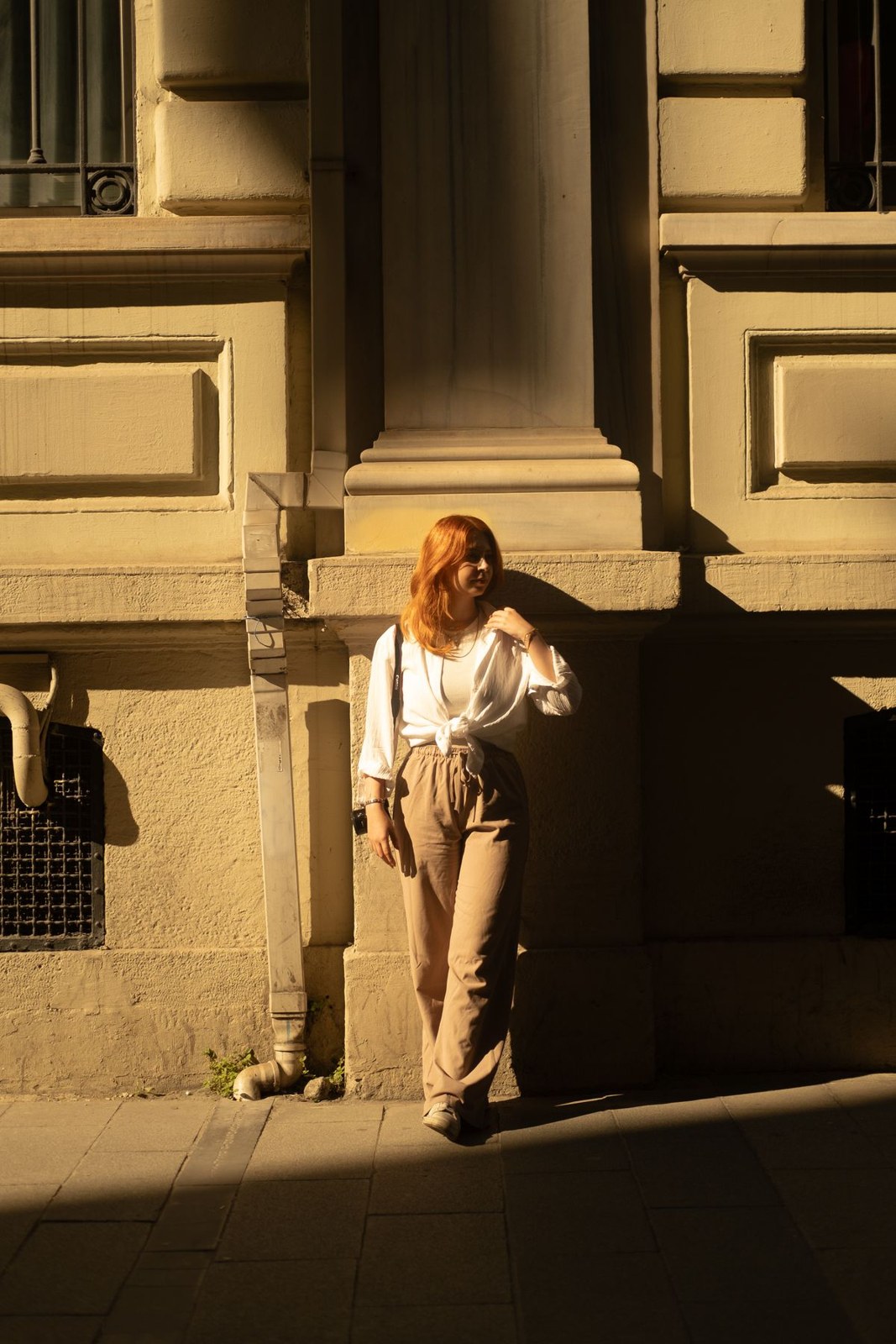
A loose white blouse with high-waisted tan wide-leg trousers makes a pale combination that benefits from some organisation at the waist. Open the waistband, place the blouse smoothly inside and then fasten it. Release a little fabric afterwards so you can stretch comfortably. Avoid gathering every bit of excess material at the front. Spread the fullness towards the sides and back without folding it tightly. If that creates a thick ring of fabric, a partial tuck or a shorter blouse will often feel more comfortable.
Move properly during the try-on
A neatly tucked hem can change as soon as you sit down. Walk a few steps, sit and raise your arms. Then see whether the blouse becomes slightly looser or pulls out altogether. Minor movement is normal in wearable clothing; continually tucking everything back in is inconvenient. The trouser pleats should also settle comfortably when you stand again. If the waistband presses, first remove excess blouse fabric rather than adding a tighter belt. Choosing trousers with more room in that area may also make the whole combination easier to wear.
Finish the light palette clearly
Brown shoes provide a softer finish beneath pale trousers; black creates more contrast. Either can work with a simple everyday work bag. Check the white blouse in daylight and choose an underlayer you feel comfortable wearing. A noticeable camisole is a deliberate styling option, rather than an unavoidable feature of pale clothes. A navy blazer can be added for cooler hours. When you remove it, the blouse and its distributed volume remain the main shape. This lets the combination work throughout a changing day without requiring every layer to stay on at once.