Use the darker outer area
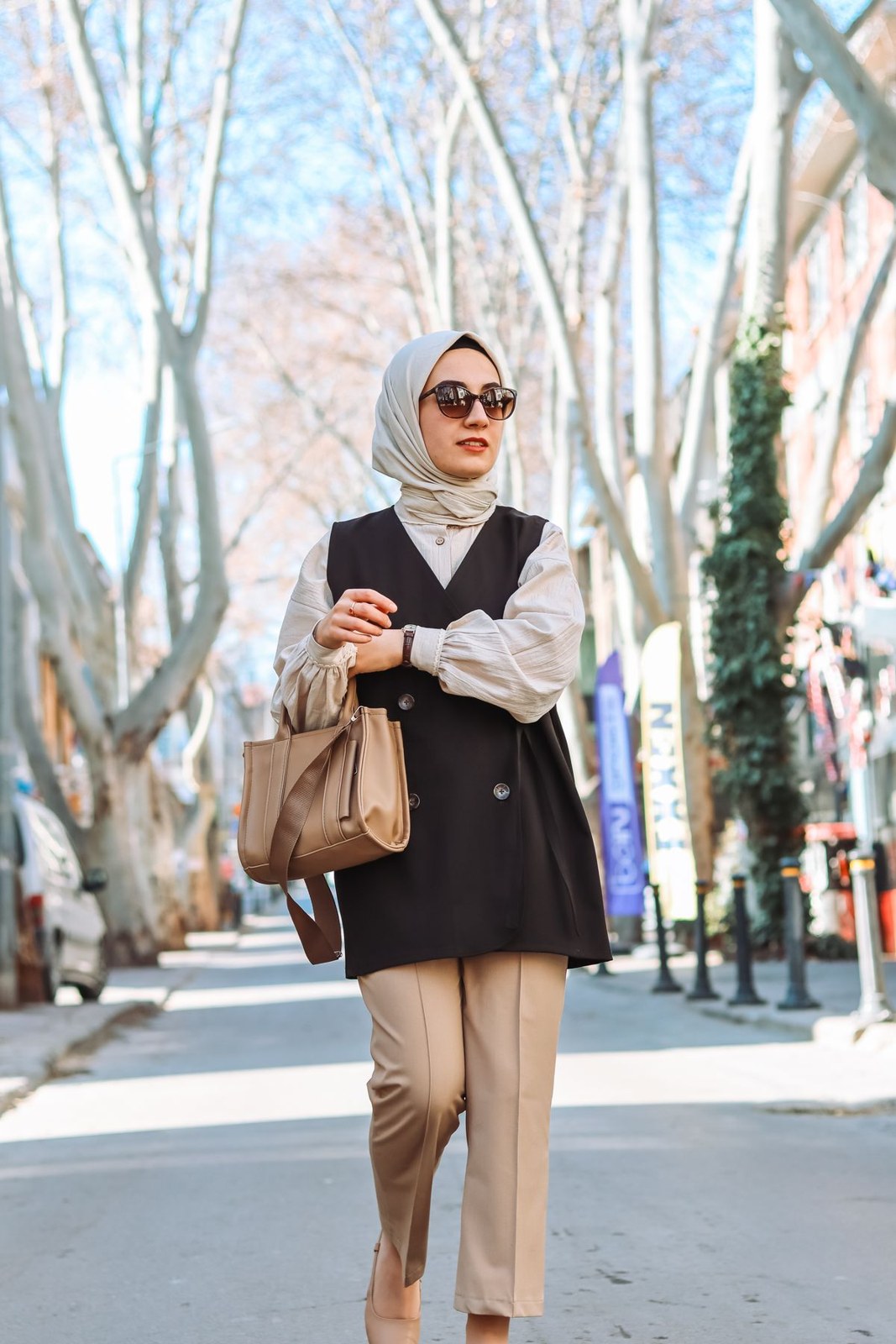
A long black vest creates a clear layer over a white blouse. Beige trousers add a warmer shade without introducing another strong contrast. Leave the vest open if you want the blouse front to remain visible. Check its hem alongside the trousers: what matters is whether the two lengths work comfortably together when walking and sitting, rather than following a fixed proportion rule.
Keep the shoulders comfortable
The blouse sleeves remain visible beneath a vest. Roomier sleeves should still pass through the armholes without bunching there. Reach forward and briefly fold your arms. If the vest pulls at that point, another combination of cuts may help more than simply choosing thinner fabric. The blouse button front should also retain enough space if you prefer to fasten the vest. Check both positions before deciding.
Include a pale scarf
A cream headscarf can pick up the lightness of the blouse without matching its exact white. Choose a tying style you can manage securely and test it with glasses or sunglasses. Arrange the ends so they do not bunch uncomfortably beneath the vest. You can use the same colour idea with a loosely worn neck scarf instead if that better suits your preferences and the occasion.
Organise the everyday details
A beige or pale-brown bag repeats the warmer part of the outfit. Test its strap over the vest, especially if you want to wear it across your body. With cropped trousers, the shoes determine the gap at the hem, so assess that connection in movement. Cooler journeys may require an outer jacket that accommodates both layers. Put it on before leaving so the sleeves, scarf and vest do not first have to compete for space once you are already outside.