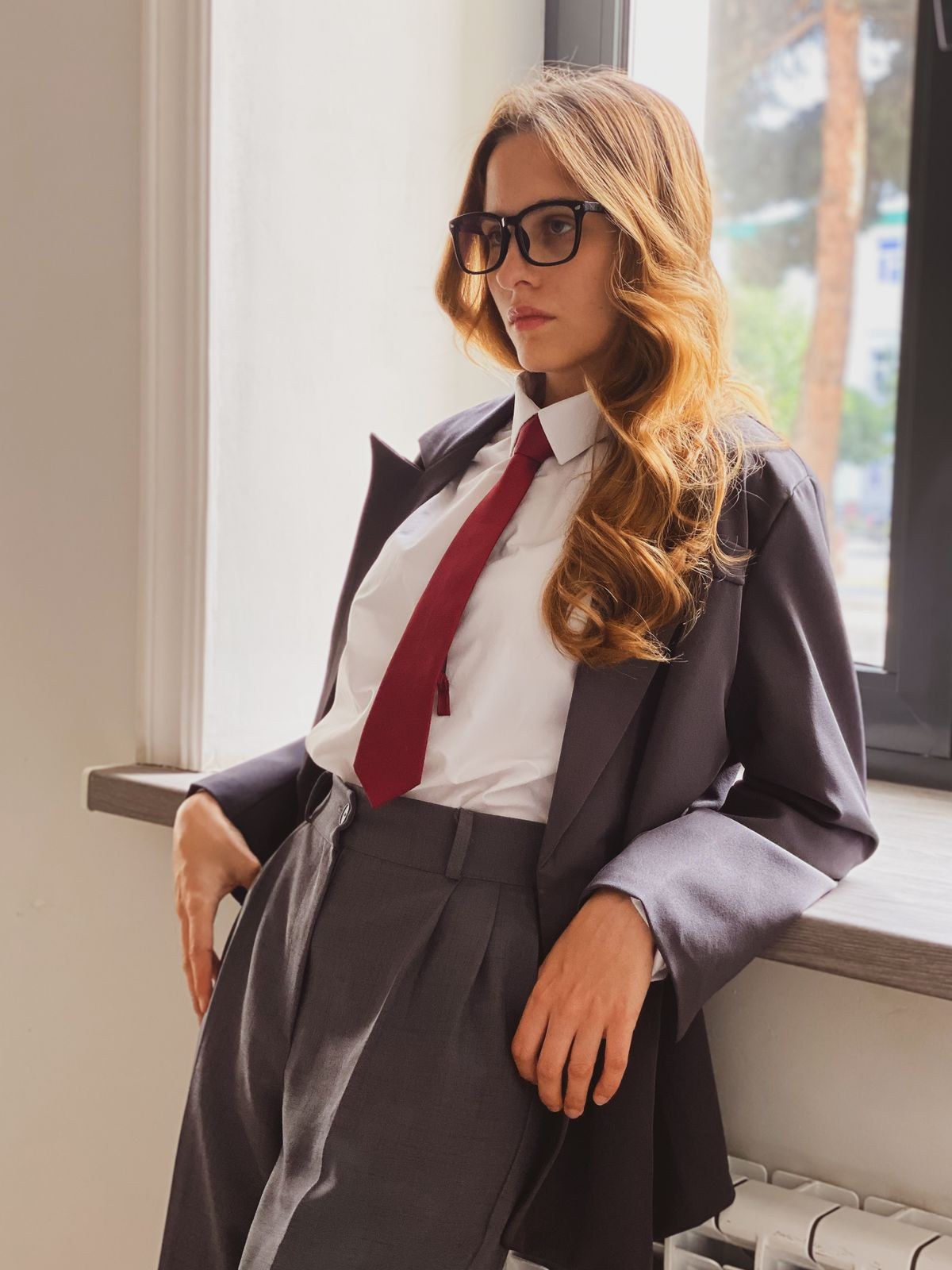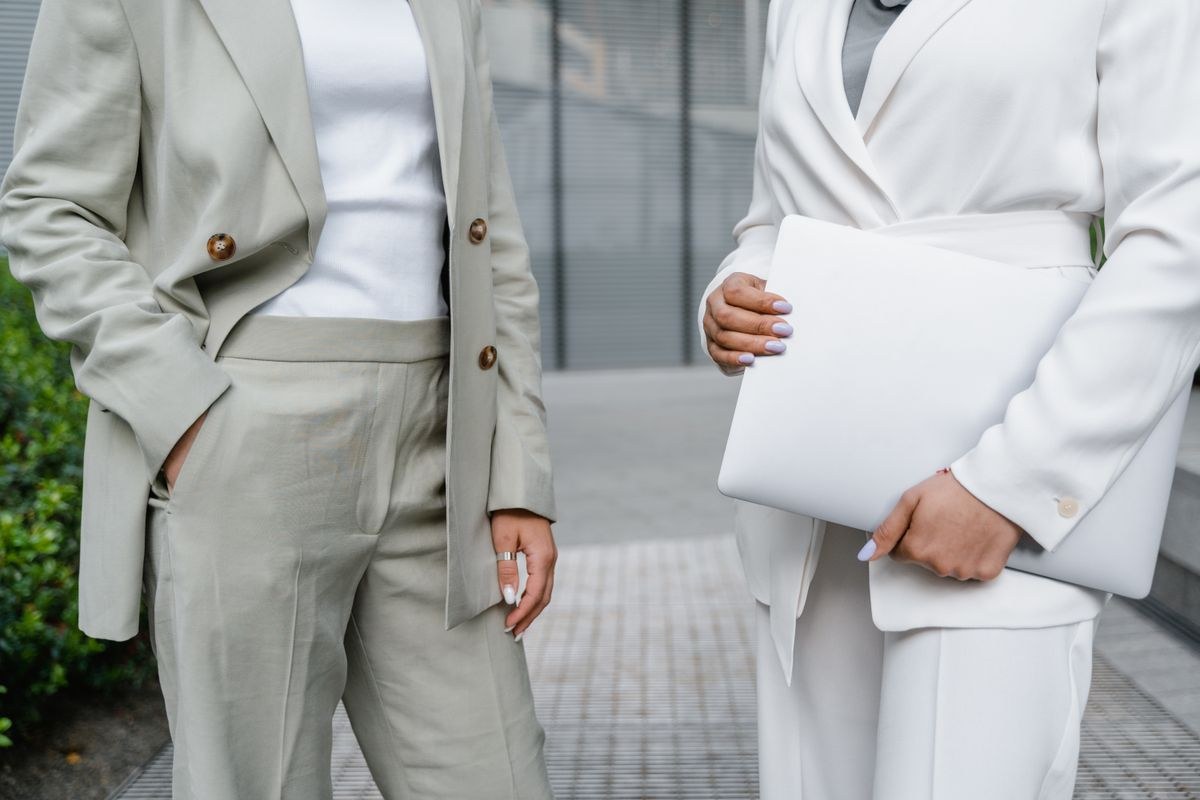
Start at the shoulders
On a more fitted grey blazer, the button arrangement can draw your attention first. Nevertheless, begin the try-on at the shoulders. Reach forward as if using a keyboard and check whether the back pulls uncomfortably. A narrower-looking waist is not useful if the upper jacket is too tight. Wear the top you actually intend to use underneath it. A thin shirt and a collared blouse need different amounts of room. Avoid putting glasses or small belongings in a chest pocket if doing so noticeably pulls the pocket out of shape.
Use dark trousers as a quiet partner
Dark trousers keep the grey blazer shape clear without introducing another strong colour block. The top can also be dark or use a pale neckline to create some separation. Choose the effect you like and check the waistband with the jacket fastened. Two firm edges sitting over each other can feel uncomfortable when you sit. Trousers with a more comfortable waistband may help more than adding a belt. Their hems should retain a useful length with the intended shoes rather than falling beneath the soles with every step.
Test the jacket during ordinary work movements
Sit at a table for a few minutes, stand up and take the jacket off briefly. An everyday blazer should allow these transitions without constant rearranging. Empty its pockets before placing it over a chair so small belongings do not fall out. A roomier coat can go over it for cooler journeys. Try both layers together: a narrow outer coat can restrict a blazer shoulder that otherwise fits well. When shopping later, this movement test is more useful than judging only how closely the jacket sits when you stand still.