Use differences within black
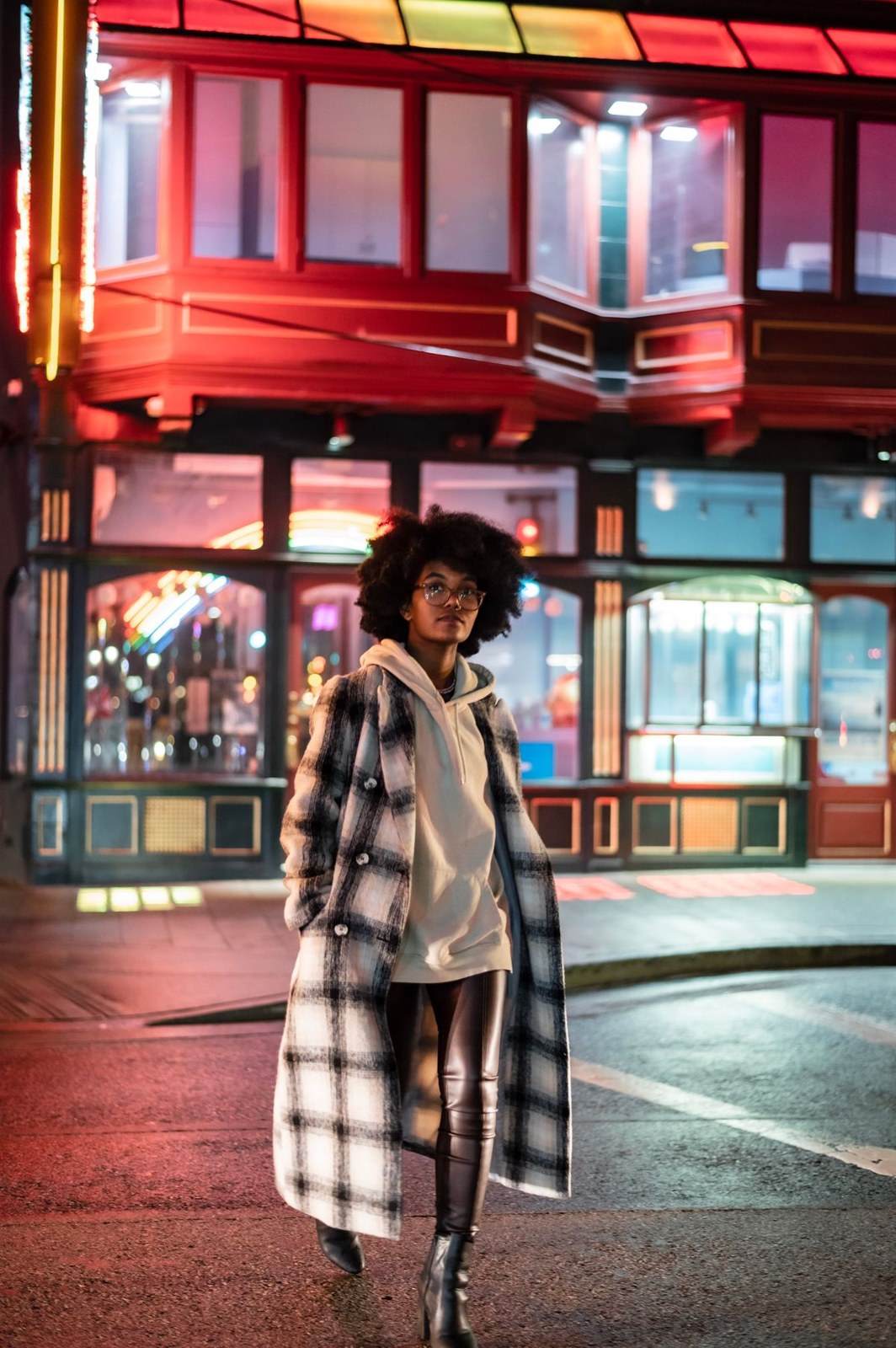
The photograph shows a black jacket with a leather-like surface, black trousers and chunky black boots. The interesting element is the shift between the smoother-looking jacket and the remaining dark areas; the combination does not need another strong colour.
Black pieces do not have to share the same surface. A more matte top can make the jacket stand out. Compare the colours together in daylight: faded black or a blue-toned shade may differ visibly. That can work, but it should suit your intended result rather than become a surprise outdoors.
Check the trouser leg against the boot shaft
The transition into substantial boots shapes much of the silhouette. A narrower trouser leg can finish neatly at the shaft or tuck inside if there is enough room. With a wider leg, check whether fabric piles on the shoe or slips beneath the sole as you walk.
You do not need tighter trousers simply because the boots look heavy. Prioritise movement and a hem that is easy to manage. Climb a step and sit down: the trouser leg should neither pull uncomfortably nor require repeated rearranging over the shaft.
Adapt the jacket to the weather
A leather-like appearance cannot establish warmth or rain resistance. Read the information for your actual garment. On a cooler day, a plain long-sleeved top may work underneath, provided you can fasten the jacket and move your arms comfortably.
Consider accessories and the route
A small black bag continues the restrained idea; a pale scarf can open the area around your face if the look feels too closed. For a longer journey, the boots' fit and sole matter more than their substantial appearance. If they do not suit the ground, another dark shoe can perform the same colour role without copying the exact shape.